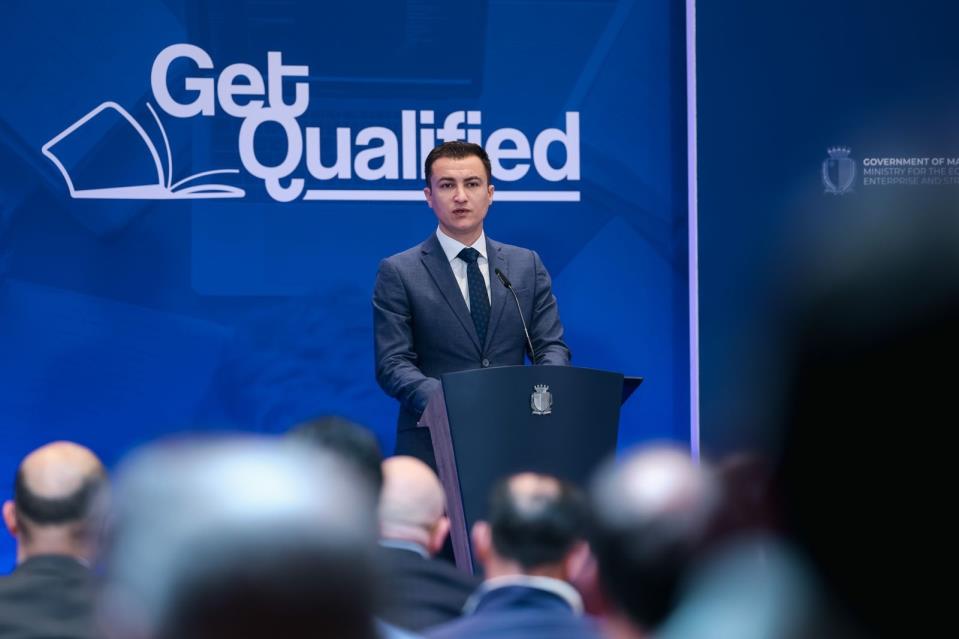
The government of Malta has made a significant move in its commitment to future development by launching an enhanced version of the Get Qualified scheme. This initiative, unveiled on Monday, April 6, 2026, aims to substantially support the growth and advancement within the Science, Technology, Engineering, and Mathematics (STEM) fields across the nation.
Why the Enhanced Get Qualified Scheme Matters for Malta's Future
This updated scheme is not merely a procedural change; it represents a strategic overhaul of Malta's educational priorities. By extending its duration until 2030, the government has provided students and institutions with a longer runway to focus on complex, future-oriented subjects essential for the modern global economy. The emphasis placed on STEM growth reflects an understanding that innovation and technological leadership are paramount to securing Malta's position in the 21st century.
The revised framework ensures that educational pathways are aligned with contemporary demands, pushing the curriculum toward areas where Malta can foster its own technological capabilities rather than relying solely on external frameworks. This enhanced focus signals a deep commitment from the government to cultivating a highly skilled and innovative workforce capable of driving economic prosperity in the years ahead.
Deep Dive into the STEM Focus and Implementation
The launch of the revised scheme, accompanied by an increased focus on STEM subjects, necessitates a comprehensive strategy for implementation. This involves restructuring educational resources, training educators, and developing specialized facilities that allow students to engage deeply with scientific and mathematical concepts. The goal is to move beyond rote learning and foster critical thinking, problem-solving skills, and creative innovation among the next generation of Maltese professionals.
The increased focus on STEM ensures that education in Malta is future-proofed. It directly addresses the need for specialized talent in technology, engineering, and scientific research, which are the cornerstones of modern industrial and technological advancement. This strategic redirection positions Malta as an educational hub capable of nurturing talent that can contribute significantly to global technological discourse.
Furthermore, the extension of the scheme until 2030 provides a stable, extended period for this transformation to take root across all levels of Maltese education. It offers a consistent environment where pedagogical methods can be adapted to emphasize hands-on learning and practical application in STEM subjects. This stability is crucial for long-term educational reform.
The Role of Stakeholders in Realizing the Vision
The success of this enhanced scheme depends heavily on collaboration between the government, educational institutions, parents, and the community. The government sets the vision and provides the framework; schools and universities must adapt their curricula and teaching methodologies to align with STEM goals. Parents play a vital role in encouraging their children to pursue these areas, while the community can provide resources and opportunities for STEM engagement outside of formal schooling.
Expertise and accountability (E-E-A-T) are essential here. Educators must receive continuous professional development to teach these subjects effectively. Institutions need investment to upgrade laboratories and technological infrastructure. This collaborative approach ensures that the enhanced Get Qualified scheme translates into tangible, high-quality STEM education for every Maltese student.
Looking ahead, Malta has embarked on an educational revolution. By prioritizing STEM through this enhanced scheme, the government is not just updating a qualification process; it is investing in the intellectual capital necessary for sustainable and innovative growth. This commitment promises to shape a future where Maltese talent leads in science, technology, and engineering.